A soil has a liquid limit of 40% and its plasticity index is 10%. The percentage passing through a 4.75 mm sieve is 60% and the percentage passing through a 75 micron sieve is 45%. The soil can be classified as:
- AGMCorrect
- BSM
- CGC
- DSM-SC
Solution
Concept
Coarse-grained soil with more than 12% fines is classified as GM/GC or SM/SC using the A-line of the plasticity chart.
Formula
A-line: PI = 0.73 (wL - 20)
Step-by-step solution
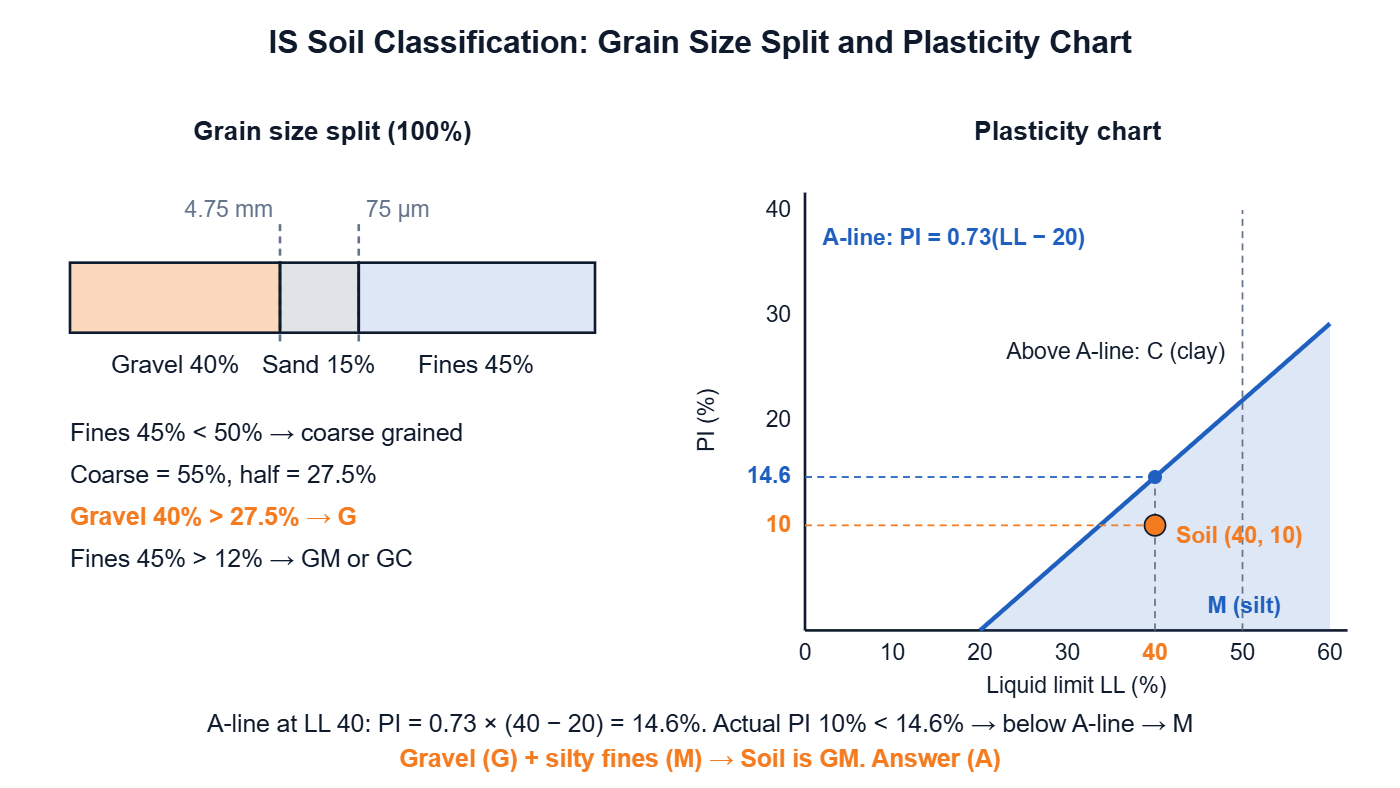
1. Fines (passing 75 micron) = 45%, which is less than 50%. So the soil is coarse grained. 2. Coarse fraction = 100 - 45 = 55%. 3. Gravel (retained on 4.75 mm) = 100 - 60 = 40%. 4. Sand = 60 - 45 = 15%. 5. Gravel (40%) is more than half of the coarse fraction (27.5%). So the soil is gravel (G). 6. Fines are 45%, which is more than 12%. So the symbol is GM or GC. 7. A-line PI = 0.73 × (40 - 20) = 14.6%. 8. Actual PI = 10%, which is less than 14.6%. So the fines plot below the A-line and are silty (M). 9. The soil is GM. Answer is (A).
Explanation
Fines are less than 50%, so the soil is coarse grained. Gravel is the major part of the coarse fraction, so the first letter is G. PI is below the A-line, so the fines are silt and the soil is GM.
Why the other options are wrong
B: Sand (15%) is less than gravel (40%), so the soil is not S. C: PI 10 is below the A-line value of 14.6, so the fines are not clay. D: Sand is not dominant, and SM-SC is a dual symbol used only near the boundary (PI 4 to 7).
Shortcut
Gravel % = 100 - %passing 4.75 mm. Compare it with half of (100 - %fines), then check PI against 0.73(LL - 20).
Common mistake
Comparing the 60% passing 4.75 mm with 50% and calling the soil sand. You must compare only within the coarse fraction.
Correct answer: A) GM