Generally, as the water-cement ratio in a concrete mix increases, the strength of the concrete
- AIncreases
- BDecreasesCorrect
- CRemains the same
- DBecomes infinite
Solution
Concept
Water-Cement Ratio and Concrete Strength
Step-by-step solution
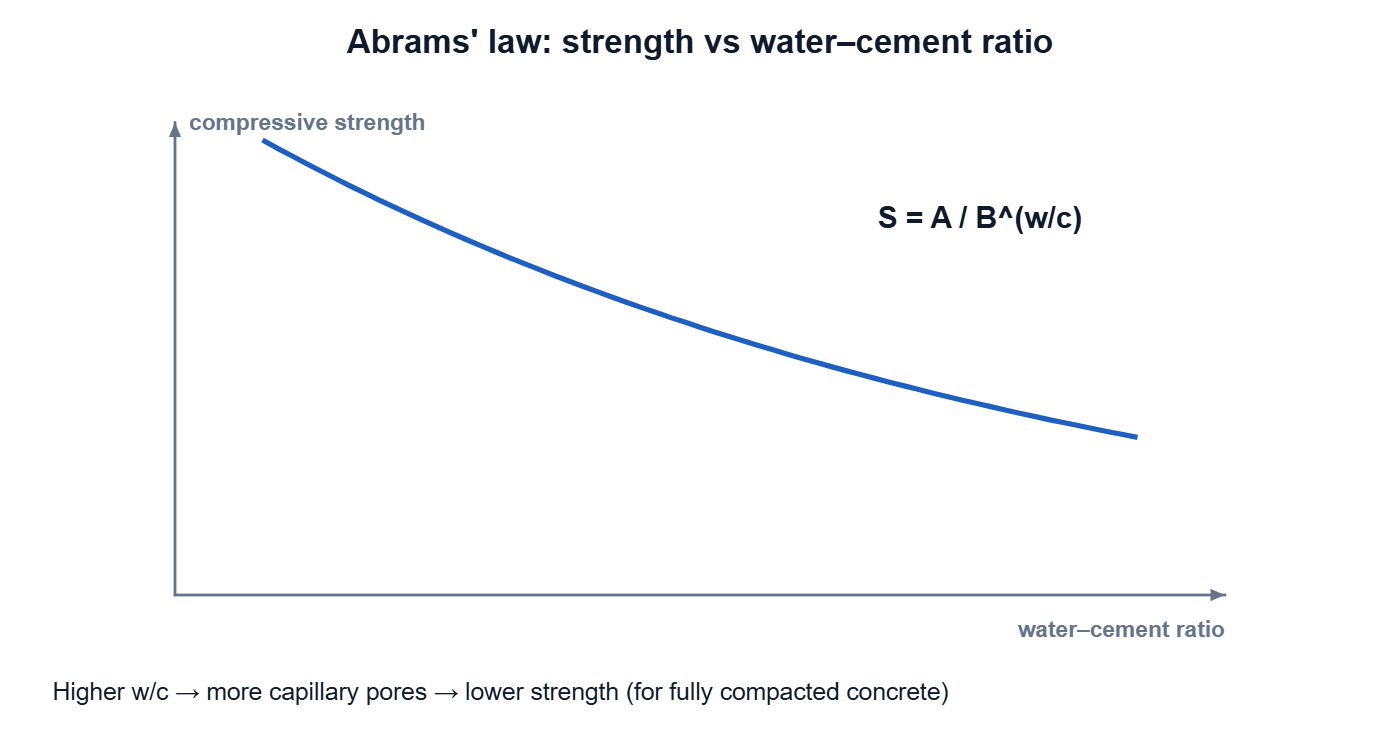
1. Review the question regarding the effect of an increased water-cement ratio on concrete strength. 2. Recall Abrams' Law, which shows that concrete strength is inversely proportional to the water-cement ratio. 3. Understand that higher water content increases porosity and reduces strength, so select Option (b) as the correct choice.
Explanation
When more water is added to a concrete mix relative to cement, it creates more tiny voids and pores as the extra water evaporates. This makes the hardened concrete paste more porous, significantly reducing its overall strength and durability.
Shortcut
To remember the relationship between water-cement ratio and concrete strength, use the simple rule "More Water = Less Power": - More Water: Higher water-cement ratio creates more microscopic pores when extra water evaporates. - Less Power: Higher porosity directly weakens the structure, so strength goes DOWN as water goes UP.
Common mistake
A common mistake is selecting Option A by confusing workability with strength, incorrectly assuming that adding more water improves all properties of concrete. While increasing water content improves workability and ease of placement, it creates excess pore space upon evaporation, which significantly reduces the compressive strength and durability of the hardened concrete.
Correct answer: B) Decreases