Which of the following is the correct sequence of layers used in flexible pavement from top to bottom?
- ABituminous layer, subgrade, base layer, subbase layer
- BBase layer, bituminous layer, subbase layer, subgrade
- CBituminous layer, base layer, subbase layer, subgradeCorrect
- DBituminous layer, subbase layer, base layer, subgrade
Solution
Concept
Flexible Pavement Layer Sequence
Formula
No formula
Step-by-step solution
- Identify the layers of flexible pavement from top to bottom: Bituminous layer, Base layer, Subbase layer, and Subgrade. - Compare this sequence with the given options. - Option C correctly matches this sequence.
Explanation
Option C is correct because flexible pavements are built in distinct layers, placed from the strongest material at the top to the natural foundation at the bottom: - Bituminous layer (Top): The uppermost driving surface made of asphalt/bitumen that resists vehicle wear and protects lower layers from rainwater penetration. - Base layer: Positioned directly under the bituminous surface to carry and spread heavy traffic loads. - Subbase layer: Located beneath the base layer to provide additional structural support and drainage while preventing subgrade soil from mixing into upper layers. - Subgrade (Bottom): The lowest layer consisting of compacted natural soil that acts as the foundation for the entire pavement structure.
Shortcut
Use the acronym/mnemonic B-B-S-S (Top to Bottom): - Bituminous layer (Surface) - Base layer - Subbase layer - Subgrade (Foundation/Bottom)·Memory Tip:* Remember Big Boys Stand Strong. Surface layers are Base-type, while underground layers start with Sub.
Common mistake
A common mistake is confusing the relative order of the base layer and subbase layer (selecting Option D instead of C) or mixing up the top-to-bottom sequence with the bottom-to-top construction sequence.
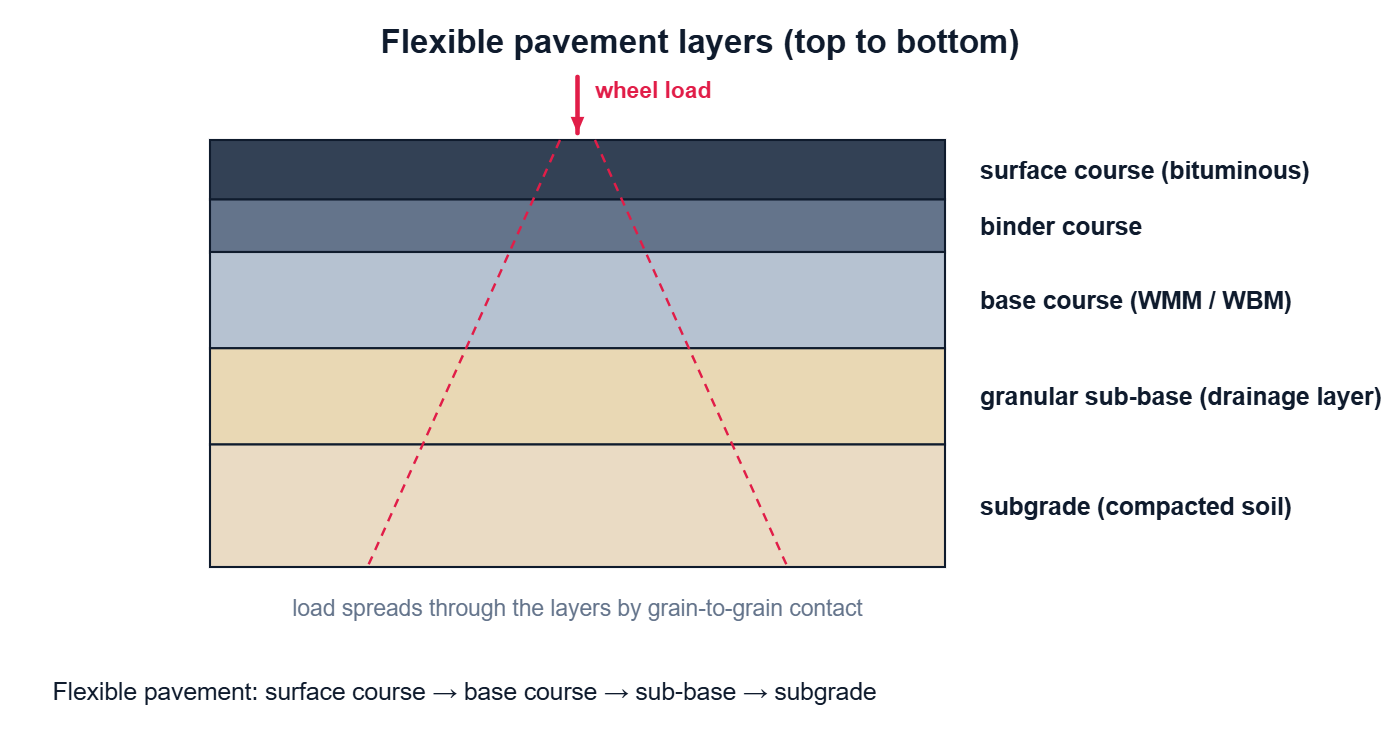
Correct answer: C) Bituminous layer, base layer, subbase layer, subgrade